Cake, Cupcake & Donut Clipart for Embroidery
As a professional embroidery designer who spends more time behind a multi-needle machine than a computer screen, I approach digital assets with a healthy dose of skepticism. When evaluating Cake Clipart, Cupcake Clipart, Donut illustrations for potential use in real-world projects, my first question is never about how cute they look on a monitor. Instead, I ask: will this actually stitch out cleanly on textured fabric? For fellow makers, Etsy sellers, and apparel decorators, the transition from a flat digital illustration to a tactile machine embroidery design is where the real work begins. These sweet-themed graphics offer immense potential for bakery branding and personalized gifts, but only if we treat them as technical blueprints rather than mere decoration.
Translating Sweet Illustrations into Stitch Logic
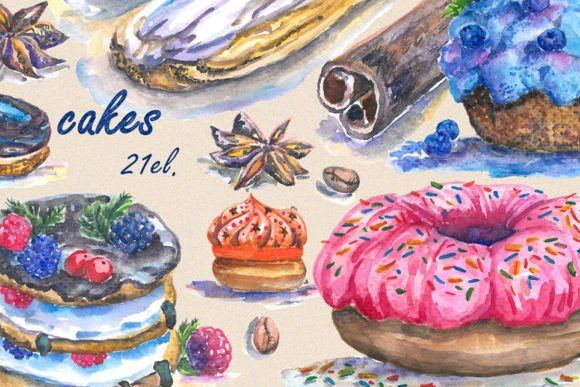
My initial impression of this specific collection of Cake Clipart, Cupcake Clipart, Donut assets is that they possess a playful, nostalgic personality that resonates immediately with customers looking for whimsical handmade products. However, visual appeal is just the starting point. As Illustrations, these files likely feature clean lines and distinct color blocks, which is promising for digitizing. When I look at a cupcake graphic, I am mentally converting the frosting swirls into satin stitch columns and the cake base into optimized fill stitch patterns. The donut shapes suggest opportunities for applique design techniques, which can reduce stitch count while adding necessary texture.
The mood these designs create is undeniably celebratory and comforting. They naturally belong in projects meant to evoke joy, such as birthday party merchandise or bakery uniforms. Yet, a designer must be critical of detail levels. Intricate sprinkles or tiny facial expressions in clipart often become thread nests or muddy blobs when scaled down for a baby bib or cap. Successful adaptation requires simplifying these elements into readable stitches that maintain the design’s charm without compromising structural integrity on fabric.
A Real-World Test: Custom Bakery Aprons and Totes
To truly evaluate the utility of Cake Clipart, Cupcake Clipart, Donut assets, let us consider a recent commission scenario: creating branded merchandise for a local artisanal bakery. The client wanted a cohesive look across heavy canvas tote bag designs and cotton twill aprons. This is where the rubber meets the road. On the tote bag, the larger cake illustration worked beautifully as a centerpiece because the stable canvas could support higher stitch density without puckering. The bold outlines provided excellent registration, ensuring the design looked professional even after repeated washing.
However, the smaller donut and cupcake motifs intended for apron pockets presented a challenge. Aprons are functional items subject to flour dust, grease, and frequent laundering. Using the raw clipart directly would have been a mistake. I had to adjust the embroidery file to increase underlay stitching and slightly widen the satin borders to prevent fraying over time. For the Etsy seller or small shop product creator, this distinction is vital. A design that looks perfect in a printable mockup might fail catastrophically on a working garment. In this case, the sweetness of the theme had to be balanced with industrial-grade durability to ensure customer trust and product longevity.
Navigating Fabric Variables and Hoop Limitations
Not every surface is friendly to confectionery art. While Cake Clipart, Cupcake Clipart, Donut graphics are versatile, they require careful placement strategies depending on the substrate. Stretchy fabrics like jersey knits used in sweatshirt embroidery or baby embroidery demand significant stabilization. If the original illustration has large, dense fill areas representing thick frosting, you risk creating a bulletproof patch that distorts the garment's drape. In these instances, modifying the design to include more open space or using lighter density fills is non-negotiable.
Curved surfaces introduce another layer of complexity. Placing a round donut design on a structured cap seems logical geometrically, but the curvature of the hat combined with the circular nature of the design can lead to registration issues at the top and bottom curves. Furthermore, dark fabrics require a different approach entirely. Light-colored cake illustrations may need an opaque white underlay or a full background shape to pop against navy or black apparel. Always test your digital embroidery file on scrap fabric that matches your final project’s weight and weave before committing to production. What works on a pillow cover may pull and pucker on a thin tea towel.
Commercial Viability and Brand Consistency
For creative entrepreneurs and craft business owners, these designs represent more than just pretty pictures; they are revenue drivers. The visual consistency of Cake Clipart, Cupcake Clipart, Donut sets allows for scalable product lines. You can use the large cake for wall hoops, the medium cupcake for adult apparel, and a simplified donut icon for tags or packaging. This cohesion builds brand recognition and makes your shop look professionally curated rather than haphazard.
However, professionalism also extends to licensing and technical verification. Before listing any finished product derived from these assets, confirm whether your license permits commercial embroidery. Additionally, verify the source files are suitable for digitizing software. Some vector illustrations are too complex for auto-digitizing and require manual tracing to ensure smooth stitch paths. Investing time in cleaning up nodes and optimizing colors now prevents thread breaks and jump stitch nightmares later. High-quality output signals to buyers that you respect both your craft and their purchase.
Essential Designer Notes for Flawless Execution
Based on extensive testing with similar sweet-themed assets, here are practical steps to ensure your embroidery project succeeds:
- Always Test First: Never run a new Cake Clipart, Cupcake Clipart, Donut design directly on a sellable item. Use scrap fabric with the same fabric texture and stabilizer combination to check for tension issues.
- Check Contrast: View the design in grayscale or simulate it on both light and dark backgrounds. Ensure internal details remain visible and do not blend into the base color.
- Evaluate Small Details: If the illustration includes text smaller than 4mm or intricate shading, simplify it. Running stitches below a certain width will sink into terry cloth or fleece.
- Verify Licensing: Double-check terms regarding personalized gifts versus mass production. Protect your business by understanding exactly how these design assets can be monetized.
- Mockup Reality Check: While printable mockups are great for listings, take a photo of the actual stitched sample. Customers appreciate seeing real thread texture and scale, which builds confidence in your custom apparel or decor.
- Hoop Size Matters: Choose the smallest hoop that comfortably fits the design to maintain proper tension. Excess empty space in a large hoop can lead to fabric shifting during long stitch-outs.
Ultimately, Cake Clipart, Cupcake Clipart, Donut illustrations are fantastic resources for bringing warmth and character to embroidered goods. Whether you are crafting a unique holiday embroidery gift or establishing a boutique identity, success lies in respecting the physics of thread. By approaching these designs with a technician’s eye and an artist’s heart, you transform simple digital files into cherished, tangible creations that stand up to real life. Remember, the best embroidered patch or garment decoration is one that looks as good after fifty washes as it did fresh out of the hoop.