Watercolor Retro Blue Truck Clipart Review
As an embroidery designer who has digitized and tested countless graphics for commercial and personal projects, I approach every new asset with a critical eye. When evaluating the Watercolor Retro Blue Truck Clipart, my first thought isn't just about how pretty it looks on a screen; it is about how those soft, blended edges will translate into actual thread on fabric. This illustration carries a distinct nostalgic charm that immediately suggests specific applications, but as we know in this industry, a beautiful digital file does not always guarantee a successful stitch-out. After reviewing this design asset through the lens of real-world production, here is my practical assessment for makers, Etsy sellers, and apparel decorators considering this graphic for their next collection.
Translating Soft Aesthetics to Stitch Reality
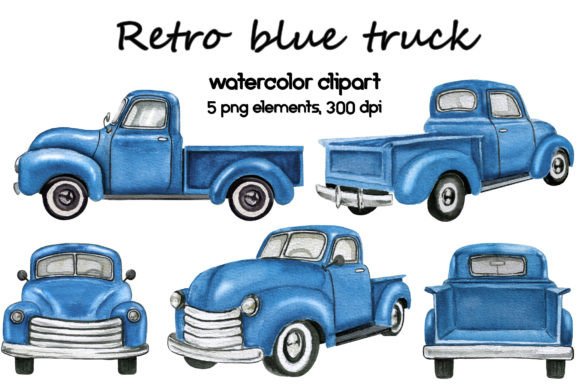
The immediate appeal of this Watercolor Retro Blue Truck Clipart lies in its vintage personality. The muted blue tones and weathered texture evoke feelings of farmhouse living, holiday traditions, and rustic Americana. For a crafter or small business owner, this mood is gold. It naturally fits into niches like nursery decor, holiday merchandise, and personalized gifts. However, watercolor illustrations present a unique challenge for machine embroidery design because they lack the hard, defined lines typical of traditional vector art.
In my experience testing similar styles, the success of this design depends entirely on how the color gradients are handled during digitization. If you are using this as a base for a custom embroidery project, you must determine if the clipart is intended for direct-to-garment printing, sublimation, or if it serves as a visual guide for creating an embroidery file. If you are digitizing this yourself, be aware that replicating watercolor washes requires complex fill stitch blending and potentially hundreds of thread colors to avoid a "paint-by-numbers" look. For those purchasing a pre-digitized version based on this illustration, scrutinize the stitch density. Too dense, and the fabric puckers; too sparse, and the watercolor effect looks muddy rather than artistic.
Real-World Application: The Holiday Tote Bag Test
To truly judge the viability of this Watercolor Retro Blue Truck Clipart, I mentally placed it onto a canvas tote bag intended for a holiday market pop-up. Canvas is a textured fabric, which can sometimes fight against delicate watercolor details. In this scenario, the truck serves as the centerpiece, perhaps laden with greenery or gifts.
For this handmade product to succeed, the design needs to hold its own against the coarse weave of the canvas. I found that this illustration works best when scaled to at least a 5x7 hoop size. Going smaller risks losing the subtle shading that gives the truck its retro character. On a tote bag design, the placement should be centered and slightly lower to account for the bag's structure when filled. If you are an Etsy seller listing this item, your printable mockup must accurately represent how the ink or thread interacts with the fabric texture. Customers trust listings that show realistic expectations. If using this for sweatshirt embroidery, consider placing the truck on the left chest for a subtle boutique branding feel, or full-back for a statement piece. Just remember that fleece fabrics absorb detail, so high-contrast elements of the truck will read better than low-contrast shadows.
Navigating Fabric Limitations and Stabilizer Choices
While the aesthetic is versatile, there are specific environments where this Watercolor Retro Blue Truck Clipart demands caution. Not all fabrics are created equal, and this style of illustration is particularly sensitive to the wrong foundation.
- Stretchy Fabrics: If applying this to baby clothes or lightweight knits, you must use a heavy-duty cut-away stabilizer. The organic shapes of a watercolor truck often require varying stitch directions, which can distort stretchy material if not properly supported.
- Dark Fabrics: Watercolor relies on transparency and light. Stitching or printing this design on black or navy fabric without a white underbase will cause the blues to disappear. Always test contrast first.
- Curved Surfaces: Avoid using this detailed illustration on structured caps unless it has been specifically digitized for curved hooping. The distortion inherent in cap frames can warp the perspective of the truck, making it look unintentionally crooked.
- Frequent Washing: For items like kitchen towels or aprons, ensure the finish is durable. If this is a printed application, verify the ink's wash fastness. If embroidered, confirm that satin stitch outlines (if present) are secured properly to prevent fraying over time.
Commercial Viability and Brand Consistency
For creative entrepreneurs and shop owners, consistency is key to building brand recognition. This Watercolor Retro Blue Truck Clipart offers a strong thematic anchor for seasonal collections. It pairs exceptionally well with kraft paper packaging, twine accents, and serif typography. However, before integrating this into your commercial embroidery lineup or digital product store, you must verify the licensing terms. Ensure you have the right to sell finished products featuring this image, or if the license restricts use to personal projects only. Nothing damages buyer engagement and professional reputation faster than a copyright dispute.
From a value perspective, this illustration elevates perceived worth when used correctly. A generic truck outline feels utilitarian; a watercolor rendition feels artisanal. This distinction allows for higher price points on personalized gifts and boutique items. Just ensure your production quality matches the elegance of the art. Sloppy registration or poor color matching will undermine the premium feel the clipart promises.
Essential Pre-Production Checklist for Makers
Before you commit this Watercolor Retro Blue Truck Clipart to a final product or list it in your shop, run through this practical evaluation process. Skipping these steps is often the difference between a five-star review and a return request.
- Verify File Specifications: Check the resolution and dimensions. For print, you need 300 DPI minimum. For digitizing reference, ensure the image is large enough to trace without pixelation.
- Test on Scrap Fabric: Never stitch the final version first. Use the exact fabric and stabilizer combination intended for the finished product to check for puckering or registration issues.
- Assess Color Accuracy: Screen colors rarely match thread or ink perfectly. Create a physical color chart comparison to ensure the "retro blue" reads correctly in real life.
- Review Small Details: Zoom in to 100%. Are there tiny artifacts or stray pixels that might translate into unnecessary jumps or messy stitches? Clean up the digital asset before production.
- Mockup Realism: When creating listings, use textures that match your actual output. A flat digital preview misleads customers; a textured mockup builds confidence.
- Licensing Confirmation: Re-read the terms of use. Document your commercial rights for your business records.
Ultimately, the Watercolor Retro Blue Truck Clipart is a beautiful asset with significant potential for the embroidery and crafting community. Its strength lies in its emotional resonance and stylistic versatility. By approaching it with technical mindfulness regarding fabric choice, stabilization, and production standards, you can transform this digital illustration into tangible, high-quality goods that customers will cherish. Whether you are stitching patches, printing tea towels, or designing nursery wall art, let practical judgment guide your creativity to ensure the final result honors both the art and the craft.